Stop the Stigma: Why Light Novels Are “Real” Books (And Why You Should Read Them)
A few weeks ago, I posted a Beginner’s Guide to Light Novels because I genuinely believe they are an underappreciated form of literature. But that post got me thinking: maybe not everyone actually sees them as “real” books.
We’ve all seen the eye-rolls. You tell someone you’re reading a book, but when you mention it’s a Light Novel, they look at you like you’re reading a comic strip.
So, here is my defense. Here is why I believe —without a doubt— that Light Novels should count as books.
First, What Exactly is a Light Novel?
Before we argue, let’s get on the same page. A Light Novel isn’t a genre (like fantasy or romance); it is a Japanese publishing format. They are typically shorter novels (about 50,000 words) that include occasional illustrations, usually in an anime style.
So, I ask you: What is the actual difference between a Light Novel and a “regular” Japanese novel like Norwegian Wood? Is it the anime art? The length? Let’s address these objections one by one.
Argument 1: Word Count and Complexity
Okay, this argument is kind of silly, but let’s humor it for a second. Some people think short books “don’t count.”
Light Novels often have word counts similar to Western YA (Young Adult) novels (roughly 40k–50k words per volume). Since when is a book’s value determined by its weight? If you have read any novellas or short fiction, you know that length doesn’t equal quality. Sometimes, the shortest books pack the biggest emotional punch.
Plus, let’s look at the content. Many Light Novels feature complex magic systems, intricate political intrigue, and deep character development that rival any epic Western fantasy series. Just look at Ascendance of a Bookworm — the world-building in that series is more detailed than most 500-page fantasy novels!
Argument 2: The Illustrations
“But it has pictures! It’s basically a comic book!”
No, it’s not.
Does Harry Potter stop being a book if you buy the Illustrated Edition? No. We consider those “deluxe versions.”
Don’t you love it when a fantasy book includes a map at the beginning? Or when a chapter starts with a small graphic? Illustrations in Light Novels work the same way. They are a bonus. They set the tone and show you character designs, but they don’t replace the writing. You still have to read the text to understand the story.
Argument 3: The “Anime Adaptation” Stigma
It is true that many (and I mean, many) Light Novels have been adapted into anime and manga. For skeptics, this association makes them feel like “merchandise” rather than literature.
But why should a screen adaptation devalue the source material?
Think about Western literature. When Game of Thrones (A Song of Ice and Fire) or Dune became massive on-screen hits, did we stop calling the original texts “real books”? Did we respect George R.R. Martin or Frank Herbert any less? Of course not. If anything, we celebrated the depth of the world-building that allowed such an adaptation to exist.
The exact same logic applies here.
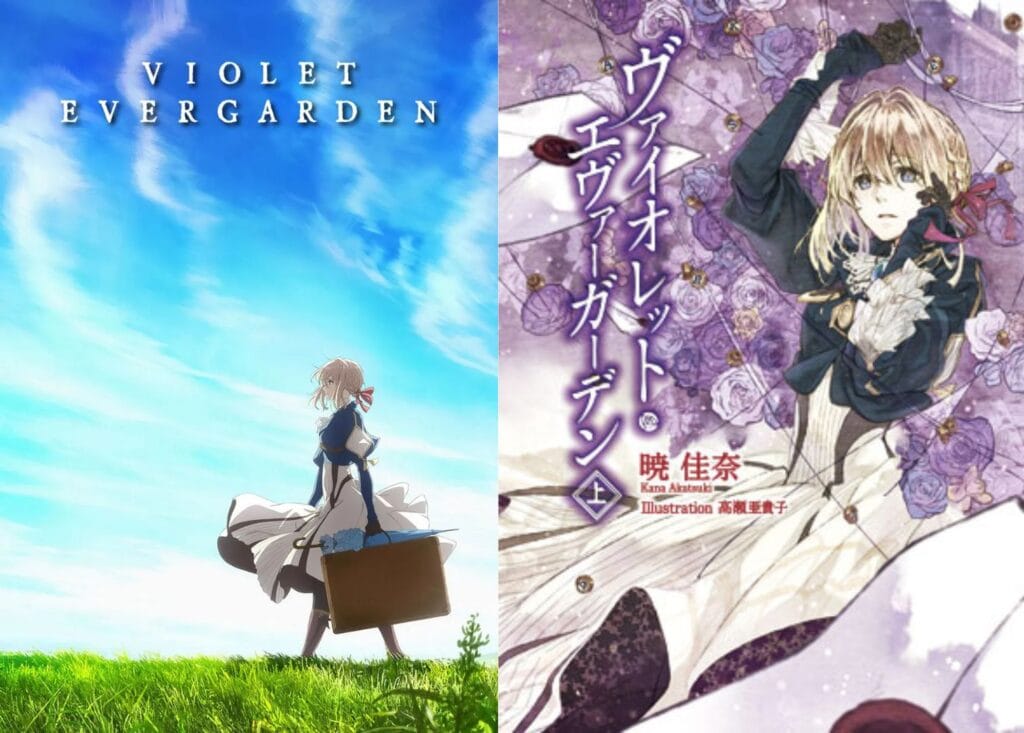
Series like Violet Evergarden or Mushoku Tensei were adapted because the original writing was so compelling that studios knew millions of people would want to watch them. An adaptation is a badge of honor. The only difference is that one medium uses live-action actors, and the other uses animation.
Argument 4: The Translation Barrier
Finally, some critics argue that Light Novels have “bad prose” or are poorly written.
First of all, a book doesn’t stop being a book just because you subjectively dislike the writing style. (I’ve read plenty of “classics” with writing I hated!)
But more importantly, for English readers, the quality of the prose is mostly determined by the translation. A clunky fan translation might sound bad, but a professional localization is just as literary as any other translated fiction. You wouldn’t say Tolstoy isn’t “real literature” just because you read a bad translation of War and Peace, would you?
Why This Distinction Hurts Readers
When we gatekeep what counts as a “real book,” we aren’t protecting literature — we are discouraging reading.
Light Novels are accessible, fast-paced, and incredibly fun. Because they are shorter and serialized, they are actually the perfect tool for getting people out of —you guessed it— Reading Slumps.
If telling someone their favorite story “doesn’t count” makes them put down a book and pick up a phone instead, then we have failed as a book community.
Final Thoughts
Reading is reading. Whether it’s War and Peace, The Great Gatsby, or Solo Leveling. As long as you are enjoying the story, that is all that matters.
Sincerely,
Lazy Cat
P.S. If you are one of those people who think listening to an audiobook counts as reading, then you have to agree that Light Novels are books. Sorry, I don’t make the rules.
Do you read Light Novels? Which one would you recommend to a skeptic to change their mind? Let me know in the comments below!