How to Annotate Books Without Ruining Them
Do you take care of your books? I sure do. I try to keep them in the best condition I can. But that comes with some problems. One of them is that I refuse to write on it. It’s troubling because sometimes I want to annotate my thoughts or highlight some quotes, but my stubbornness keeps me from it.
That was until I learned how to annotate books without ruining them. It is a game-changer. I can finally keep track of my thoughts and theories as I read! And so I decided to share what I learned.
Why annotate your books?
If you have trouble remembering what you read, this might be of help.
It is scientifically proven that annotating while you read helps you have better retention. Also, you’re forcing yourself to read actively, which means you’re engaging deeply with the text to understand, evaluate, and remember its content. Annotation is one of the strategies listed in order to read actively.
And let’s not forget that, in understanding the text better, we’re also creating a dialogue with the author. Connecting with them.
Essential Supplies for Safe Annotation
In order to safely annotate books without ruining them, we need the right materials. It is essential that these are of good quality, since they could easily ruin our book (and we wouldn’t want that, right?).
Here are the tools I swear by to keep my pages looking pristine:
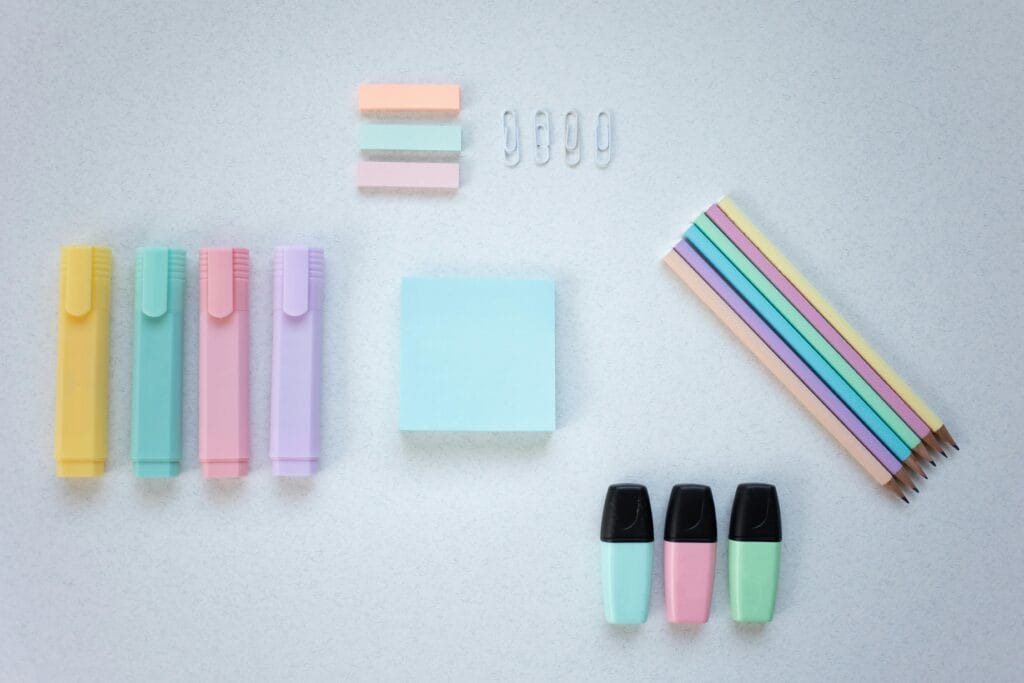
Transparent Sticky Notes
If there is one item you buy from this list, make it this one. Transparent sticky notes are exactly what they sound like—clear, plastic-like squares that you can stick right over the text. The magic here is that you can highlight or underline passages on the note without ever touching the actual book paper. Because they are usually made of a thin PET material, they are durable and don’t crinkle. Plus, seeing the text clearly through the note makes reading seamless.
Archival Quality Page Flags and Tabs
Gone are the days of dog-earing pages (which, let’s be honest, is a cardinal sin for us book collectors). Page flags are perfect for marking a specific line or paragraph that resonated with you. I recommend looking for “archival quality” or acid-free tabs. This ensures the adhesive won’t turn yellow or degrade the paper over time. I use different colors to track different themes—but more on that in a minute.
The Right Writing Tools
Since transparent sticky notes have a glossy surface, regular gel pens will smear instantly. You need to use ballpoint pens or, even better, a permanent fine-liner. For the book pages themselves —if you must write or underline directly— ditch the ink. Use a soft graphite pencil (like a B or 2B). It is dark enough to read but soft enough that it won’t indent the paper, and best of all, it is 100% erasable if you change your mind.
How to Create a Non-Destructive Color Code System
Now that you have the supplies, how do you organize the chaos? I found that creating a color-coding system prevents me from needing to write long notes in the margins. Instead of writing “this is a sad moment,” I just use a blue tab.
Here is a simple system you can adapt:
- Blue: Sad moments or character deaths.
- Pink: Romance, sweet moments, or “ships.”
- Yellow: Important plot points or world-building facts.
- Green: Quotes I love and want to remember.
- Purple: Things that confused me or theories I want to revisit.
Pro-Tip: Don’t try to memorize this! I write my “legend” on a separate bookmark or index card and keep it inside the book I’m currently reading.
Step-by-Step: The “Gentle” Method
Even with the right tools, technique matters. Here is my process for keeping the book structure safe while annotating:
- Tab the Outer Edge: When placing your flags, stick them on the outer vertical edge of the page, not the top. Tabs on the top can get crushed if you put the book in a bag, but side tabs stay protected.
- The Peel Technique: When you eventually want to remove a sticky note or tab, don’t pull it straight up. Pull it slowly, flat against the page. This prevents the paper fibers from lifting and curling.
- Read First, Tab Later: I try to finish the page before I stick anything down. It keeps me in the flow of the story and stops me from over-annotating every single sentence.
Final Thoughts
Annotating books doesn’t have to mean ruining them. By switching to transparent notes and safe adhesives, you can have the best of both worlds: a pristine library and a deeply personal reading experience.
It has definitely changed how I read, and I hope it helps you too. Now, I’d love to hear from you — what is your biggest fear when it comes to writing in books? Let me know in the comments!